题目:
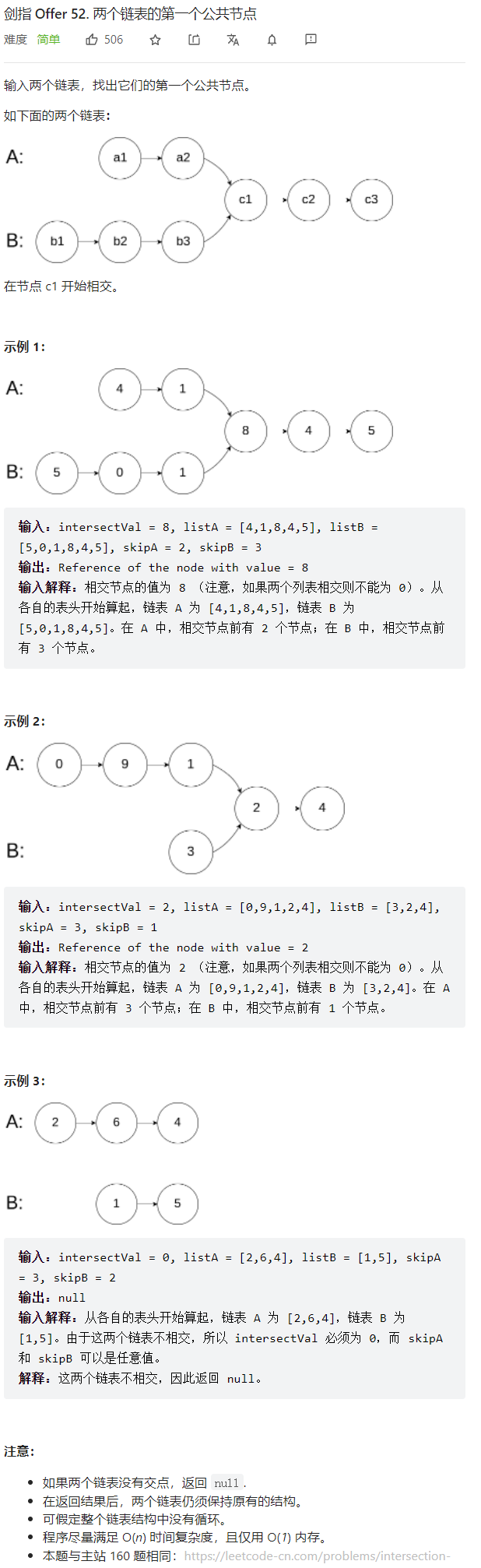
题解:
1、哈希表法
解题思想:先把链表headA都放在set集合中,然后循环链表 headB比较 headB和headA的==指针==是否有相同,相同则,说明找到了第一个公共节点,返回该指针。否则没无公共节点,返回null。
复杂度分析
**时间复杂度:O(m+n)**,其中 m 和 n 是分别是链表 headA 和 headB 的长度。需要遍历两个链表各一次。
**空间复杂度:O(m)**,其中 m 是链表 headA 的长度。需要使用哈希集合存储链表 headA 中的全部节点。
代码:
1
2
3
4
5
6
7
8
9
10
11
12
13
14
15
16
17
18
19
20
// 哈希表法
class Solution2 {
public ListNode getIntersectionNode(ListNode headA, ListNode headB) {
Set<ListNode> visited = new HashSet<ListNode>();
ListNode temp = headA;
while (temp != null) {
visited.add(temp);
temp = temp.next;
}
temp = headB;
while (temp != null) {
// 如果set集合包含temp指针,则headA和headB链表有相同的指针
if (visited.contains(temp)) {
return temp;
}
temp = temp.next;
}
return null;
}
}
2、双指针
解题思路:
复杂度分析:
**时间复杂度:O(m+n)**,其中 m 和 n 是分别是链表 headA 和 headB 的长度。两个指针同时遍历两个链表,每个指针遍历两个链表各一次。
**空间复杂度:O(1)**。
代码:
1
2
3
4
5
6
7
8
9
10
11
12
// 双指针
public class Solution {
public ListNode getIntersectionNode(ListNode headA, ListNode headB) {
ListNode a = headA;
ListNode b = headB;
while(a != b) {
a = a != null ? a.next : headB;
b = b != null ? b.next : headA;
}
return a;
}
}